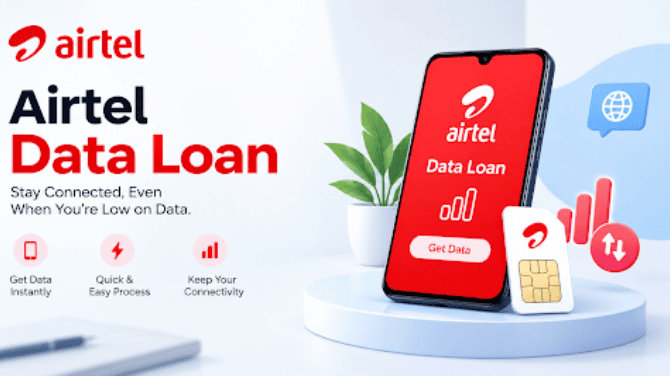
In India, the use of mobile data has transitioned from being a convenience to a necessity for most people. As people use the internet for all aspects of their lives — including both professional and personal — they consume more and more data. But what do you do when you lose access to mobile data during critical times? That is where the Airtel Data Loan comes in. The Airtel Data Loan is a micro-loan product that provides users with a specified amount of data immediately. This article will explore the inner workings of the Airtel Data Loan, the impact of its use on consumers, and the intriguing economic factors that are part of this modern day solution.
What is an Airtel data loan?
Airtel Data Loan is designed to enable users who are currently on the Airtel network to use up their existing mobile data. Uses of this type will generally have to get more data faster, but not have enough cash to pay for a new plan from the Airtel network when they need more data. The idea of “borrowing” mobile data is quite new, but the program’s services are basically a micro-credit service. Micro-credit services are gaining popularity day by day as they provide customers with a platform to avail small loans for clearing up short-term debts. The Airtel Data Loan service will provide you with a certain amount of data at a fixed price. Once you have used up that amount of data, your prepaid balance will be reduced by that amount.
In the majority of cases, data you can borrow is dependent on your needs. Therefore, it is possible to borrow a small amount of data, 50MB or a bigger amount of data, 1GB. Additionally, paying off this type of loan is very easy; the amount owed will be automatically subtracted from either your next recharge or balance so there are no additional steps required to complete the payment process.
How does the Airtel data loan work?
When a customer signs up for the Airtel data loan service, they can request a data loan as needed. The customer’s existing data plan, total account balance, and history of data loans are the main factors that determine eligibility. If a customer is eligible for a data loan and runs out of data, he/she may simply submit a request using either the mobile application or USSD code to activate the loan.
Once approved, the loan amount can immediately go into the user’s account. If the user borrows a large amount of data such as 100MB, the user can use the data immediately and there should not be any time wasted before the user can begin to use the data. Users will pay the same rate each time they borrow data so that they can understand exactly what costs they are incurring when they take out a loan. This gives users greater transparency regarding their data use, and helps them control their data use.
For example, when a 100MB data loan has an associated fee of ₹10, the ₹10 will be deducted from your account as soon as possible after taking out the loan; so this is a simple, no-hassle way to get a data loan.
What are the implications of data loans?
Mobile data loans offer users a completely different way to interact with mobile data. These loans act as a safety net when users run out of data before they are able to purchase more. With the shift toward a digital economy, being able to access mobile data ensures users stay connected to their jobs, education, and relationships.
However, it will be necessary to utilize the features of this program wisely. This program’s affordability of loans will continue to be a primary factor in deciding whether or not to use it. Small amounts of money can add up over time, which can lead to unanticipated expenses. Therefore, users must understand how they consume data, and budget accordingly so that they do not rely upon loans more than is required.
The innovation above represents a general movement by telecommunication providers toward offering micro-credit services. Micro-credit services represent an untapped market with significant growth opportunities. Data loans offer customers convenience, however, there are many economic issues related to data ownership and customer loyalty. If customers experience convenience from the use of data loans, they will be less likely to budget their data effectively, which could lead to increased revenue for the providers.
Paying through Bajaj Pay
If you’re looking to find ways to control your mobile data spending as much as possible, Bajaj Pay is an excellent way to do so; not only does it offer zero-cost options to recharge Airtel data plans, but also to pay off data loans. Users can use either the Bajaj Finance App or the website to recharge their Airtel numbers at no extra charge. Recharge processes are extremely easy — users enter their mobile numbers, choose how much money they want to top up their account with (which is free), and then confirm the payment. Once users make a payment, Bajaj Pay will verify that payment immediately, create a receipt for that user, and let them know that the payment was successful. Additionally, users can receive rewards for each time they use Bajaj Pay, which makes it a great tool to help manage mobile expense.
Conclusion
Airtel’s data loan is a shift in the mindset of consumers when it comes to mobile data services. Users can borrow data on the go, offering a pragmatic and convenient safety net. While borrowing data might be a solution when in need, users need to be careful and not end up paying extra when using such services. One such platform, Bajaj Pay, allows users to top up their Airtel data plans and control their data loans with ease and without extra costs. This makes it possible for users to remain connected despite their budgets. If you’ve never seen the advantages of a data loan, it could be an ideal time to find out.