
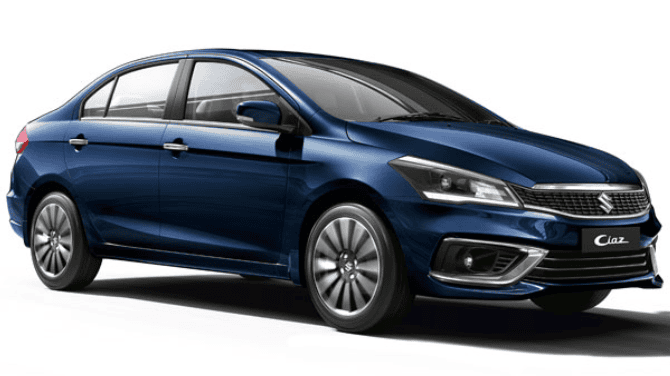
The Ciaz built its reputation around a spacious rear seat, relaxed petrol engine and long-distance comfort. In 2026, however, the first thing a buyer needs to know is not its mileage or boot space: the Ciaz is no longer part of Maruti Suzuki’s current NEXA new-car line-up. That changes the buying decision completely. Any Ciaz you evaluate now is likely to be existing stock, a dealer-specific situation or a pre-owned car rather than a normal current-production purchase.
Why the current model status matters
Maruti Suzuki’s present NEXA portfolio lists Baleno, Fronx, Grand Vitara, XL6, Ignis, Jimny, Invicto and e VITARA, but not Ciaz. Production data for January 2026 also showed no Ciaz output. That means an old online price, cached listing or previous brochure should not be treated as a live 2026 new-car price. If a dealer claims new inventory is available, verify the manufacturing month, vehicle identification details and warranty start terms before paying a booking amount.
What made the Ciaz practical for families?
The appeal was straightforward: a sedan body with a generous cabin, comfortable second-row seating and a substantial boot. The 1.5-litre petrol engine was tuned for smooth everyday progress rather than aggressive performance. For a family that travelled with four or five occupants, the combination of rear-seat room and a separate luggage compartment made the ciaz car especially useful on airport runs and highway holidays.
| Last-established specification context | Figure |
| Engine | 1.5-litre petrol |
| Peak power | about 77 kW |
| Peak torque | 138 Nm |
| Body type | Mid-size sedan |
| Transmission context | Manual and automatic were offered |
How does it behave in city use?
A long sedan needs more parking length than a compact SUV or hatchback, but the low seating position and predictable petrol power delivery can feel natural to drivers who prefer conventional cars. The automatic version reduces effort in traffic, while the manual suits drivers who want more control and lower mechanical complexity. The important 2026 issue is condition: an older stock or used Ciaz should be inspected for tyre age, battery health, service history and signs of extended storage.
What should highway buyers pay attention to?
On longer runs, seat support, straight-line stability, tyre condition and braking confidence matter more than a brochure feature list. Check whether the car tracks straight under braking and whether there is uneven tyre wear. Listen for suspension noise over rough patches. If you regularly travel with rear passengers, take them on the test drive; the Ciaz’s key advantage is cabin comfort, so it makes sense to confirm that the specific car still delivers it.
Mileage needs context when comparing alternatives
Older official figures and road tests can still help you understand the ciaz mileage efficiency character, but they should not be used as a promise for an individual used vehicle. Engine condition, tyre pressure, traffic, air-conditioning load and driving style can materially change consumption. Compare expected running cost with current alternatives such as newer petrol sedans or hybrid SUVs only after adjusting for your annual kilometres.
How should you assess a remaining-stock offer?
A large discount can look attractive, yet age affects more than resale value. A car that has stood for months may need attention to tyres, battery charge and fluids. Confirm the warranty start date in writing and check whether roadside assistance or service packages begin from retail delivery. Compare the effective saving with the lower resale value of buying a discontinued model. Parts support can continue for years, but availability of trim-specific cosmetic pieces may differ from that of a current high-volume model.
What if you are considering a used Ciaz?
A pre-owned example can make more sense than old unsold stock if the price reflects age and condition. Review insurance history, registration details, service records and any outstanding finance. Inspect accident repairs carefully, especially around chassis members, airbags and seat-belt pretensioners. A clean, well-maintained car with transparent history is usually more valuable than a cosmetically fresher example with missing records.
For an older sedan, availability of wear parts is usually less worrying than the condition of the specific car. Budget for tyres, battery and fluids if age suggests they are due. A lower purchase price is only a saving when the first year does not immediately require expensive catch-up maintenance.
Because the Ciaz is no longer part of the active current NEXA retail line-up, the buying process is different from shopping for a new mainstream sedan. A remaining dealer vehicle, if any exists, needs its manufacturing date, warranty start conditions, tyre age and registration status checked carefully. A pre-owned example needs service records, insurance history, pending challan checks and an independent mechanical inspection. Do not use an old launch-era ex-showroom price as a benchmark for what a specific car is worth today.
For highway-focused families, the Ciaz still illustrates why a low-slung sedan can be appealing: a long wheelbase, a separate boot and relaxed seating can work well for four adults. The trade-off is ground-clearance awareness on broken roads and less flexible cargo loading than many SUVs. Inspect underbody condition on an older example and listen for suspension noise over uneven surfaces. A well-maintained car can remain pleasant; neglected wear can quickly erase the saving from a lower purchase price.
Conclusion
The Ciaz can still be a comfortable family sedan, but the 2026 buying question is fundamentally about model status and condition. Do not rely on old new-car price tables. Verify whether the car is remaining stock or pre-owned, inspect it carefully and compare the effective cost with current alternatives. Its space and relaxed nature remain relevant, but only at a price that reflects the fact that it is no longer in the active NEXA line-up